BUDGET: 10 crore INR and above (USD1.48 million and above)
Project Overview
Engineering the Communication Backbone of a Modern Airport.
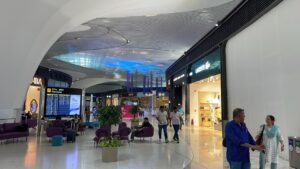
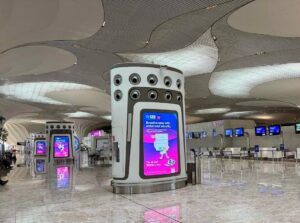
Behind every successful airport is a network of technologies that keeps passengers informed, operations coordinated, and safety uncompromised. At Navi Mumbai International Airport (NMIAL), SI delivered the Public Address & Voice Alarm (PAVA) system together with the mission-critical control room visualisation infrastructure, creating a reliable communication backbone for daily operations and emergency response.
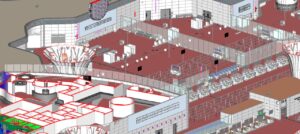
The deployment combined the Bosch PRAESENSA IP based PAVA platform with BOSE Professional loudspeaker solutions, engineered through detailed acoustic simulations to deliver clear and intelligible announcements across the terminal. Complementing this are the control room video wall systems, enabling operators to monitor airport operations and make faster, informed decisions.
Every element was designed with a single objective: to deliver a communication infrastructure that is reliable, resilient, and ready to perform under all operating conditions.NMIAL marks another significant milestone for SI, reinforcing its expertise in delivering integrated communication solutions for India’s landmark infrastructure projects.
What did the client want to achieve?
The client’s primary objective was to deliver a communication and control infrastructure that ensured passenger safety, operational continuity, and high system resilience. For the PAVA system, the requirement was a fully compliant life safety platform capable of delivering clear, intelligible announcements for routine passenger information, automated flight updates, background music, and emergency evacuation, while integrating seamlessly with systems such as the Fire Alarm System (FAS), Automated Flight Announcement System (AFAS), Building Management System (BMS), and VoIP infrastructure. For the control room video wall systems, the focus was on creating highly reliable command and control environments that provide operators with real time visibility of airport operations, security, baggage handling, and ICT systems. Across both deployments, the emphasis was on 24×7 availability, redundancy, centralized monitoring and control, and the flexibility to support both routine airport operations and emergency response without interruption.
Scope of work your company was involved in
Pyramid Technologies was responsible for the design, engineering, supply, installation, integration, testing, commissioning, and operational readiness support of the Public Address & Voice Alarm (PAVA) system and mission-critical control room visualisation systems at Navi Mumbai International Airport (NMIAL).
The PAVA scope covered the Passenger Terminal Building, including check-in halls, security screening areas, immigration, baggage reclaim, retail spaces, departure lounges, arrival corridors, boarding gates, and forecourt areas. The system was integrated with key airport platforms, including the Fire Alarm System (FAS), Automated Flight Announcement System (AFAS), Building Management System (BMS), and VoIP infrastructure.
The visualisation scope included video wall systems and associated processing and control infrastructure for the Airport Operations Control Centre (AOCC), Airport Emergency Operations Control Centre (AEOCC), Security Operations Control Centre (SOCC), Baggage Handling System (BHS) Control Room, and Network Operations Centre (NOC), enabling real-time operational monitoring and decision support.
What key challenges were faced?
One of the key challenges was achieving consistent speech intelligibility across the airport’s architecturally diverse spaces, including expansive check-in halls, passenger concourses, retail areas, and baggage reclaim zones. SI addressed this through detailed acoustic modelling and EASE simulations, evaluating multiple loudspeaker configurations, coverage patterns, and beam steering strategies to optimise Speech Transmission Index (STI) while accommodating architectural constraints.
Another major challenge was integrating the PAVA system with multiple airport platforms, including the Fire Alarm System (FAS), Automated Flight Announcement System (AFAS), Building Management System (BMS), VoIP infrastructure, and the airport’s communication network. This required rigorous interface management, testing, and validation to ensure seamless interoperability and the high level of reliability expected of a life safety system.
The project was also executed alongside an evolving airport construction programme involving multiple stakeholders. Close coordination with the client, L&T Construction, consultants, and specialist contractors, together with phased testing, commissioning, and ORAT activities, ensured the systems were fully operational and ready for airport opening.
How were those challenges resolved?
The challenges were addressed through a combination of detailed engineering, rigorous planning, and close collaboration with all project stakeholders. Extensive acoustic modelling and EASE simulations were undertaken during the design phase to optimise loudspeaker selection, placement, and coverage for each terminal zone, ensuring the required speech intelligibility while accommodating architectural constraints.
A structured systems integration approach was adopted to interface the PAVA platform with the Fire Alarm System (FAS), Automated Flight Announcement System (AFAS), Building Management System (BMS), VoIP infrastructure, and other airport systems. Comprehensive factory acceptance tests (FAT), site acceptance tests (SAT), interface validation, and phased commissioning ensured seamless interoperability and system reliability.
Given the scale of the project, continuous coordination with the client, L&T Construction, consultants, OEMs, and specialist contractors was critical throughout execution. This collaborative approach, together with structured ORAT activities prior to airport opening, enabled issues to be identified and resolved proactively, ensuring the systems were fully operational, reliable, and ready to support airport operations from day one.
How has your work helped the client?
Pyramid’s solution has provided the client with a resilient communication and control infrastructure that supports the safe and efficient operation of Navi Mumbai International Airport. The PAVA system enables clear passenger announcements, automated flight information, background music, and emergency voice evacuation, while seamless integration with the Fire Alarm System (FAS), Automated Flight Announcement System (AFAS), Building Management System (BMS), and VoIP infrastructure ensures coordinated airport wide communication. The control room video wall systems provide operators with real time visibility of airport operations, security, baggage handling, and ICT systems, improving situational awareness and enabling faster decision making. Designed with redundancy, scalability, and high availability, the solution supports uninterrupted 24×7 operations and future expansion. Through detailed engineering, acoustic optimisation, rigorous testing, commissioning, and successful ORAT activities, Pyramid delivered systems that were operationally ready from day one, enhancing passenger experience, operational resilience, and long term value for the client.
What are you most proud of about the project?
We are most proud of the fact that that the systems we delivered have become an integral part of the airport’s daily operations. In an airport, communication systems are often unnoticed when they work well, yet they play a vital role in passenger safety, operational continuity, and emergency response. Knowing that millions of passengers will rely on this infrastructure over the years is immensely rewarding.
We’re equally proud of how our team approached the project. NMIAL demanded far more than technical expertise it required detailed engineering, meticulous planning, continuous coordination with the client, L&T Construction, OEMs, and other stakeholders, and the ability to adapt to evolving project requirements without compromising quality or performance.
Above all, we’re proud that the project was delivered exactly as it was intended to be and to the standards expected of a critical airport environment. Seeing the airport operating successfully with these systems in place is the most rewarding outcome for everyone involved.
VIDEO link of the project space: Not available.