BUDGET: Between 1 crore INR and 4.99 crore INR (More than USD135,000 but less than USD540,000)
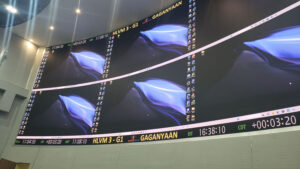
Project Overview
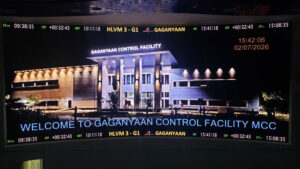
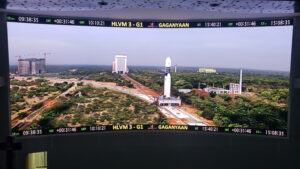
In a Space Command Centre, uninterrupted access to mission-critical information is essential for successful mission execution. This project delivered a resilient, high-availability visualization platform that provides mission controllers with continuous access to telemetry, live video, operational data, and collaborative decision-making tools throughout every phase of a mission.
The solution combines a Christie Core II LED video wall with a fully redundant AV infrastructure comprising dual Extron matrix switchers, dual Quantum Ultra II video wall processors, redundant LED controller paths, and an N+1 rectifier-based power architecture. This resilient design eliminates single points of failure across both signal and power systems, ensuring uninterrupted operation even during equipment failures.
An intuitive touchscreen interface enables centralized control, rapid source switching, preset-based visualization, and seamless management of multiple mission-critical sources. By combining engineering resilience with user-centric design, the project enhances situational awareness, enables faster decision-making, and ensures continuous operations in one of the world’s most demanding mission-critical environments.
What did the client want to achieve?
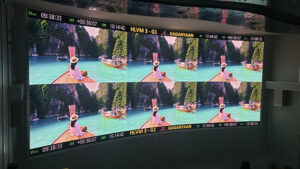
The client required a highly reliable visualization platform for a mission-critical Space Command Centre, centred around a 15 m × 6 m seamless LED video wall. The objective was to create a centralized environment capable of displaying multiple real-time sources, including telemetry, surveillance feeds, workstation outputs, and IP-based content, enabling operators to monitor missions, collaborate effectively, and make informed decisions with confidence.
A key requirement was to eliminate single points of failure through a fully redundant AV and visualization infrastructure with N+1 power redundancy, ensuring uninterrupted operation even during equipment or signal path failures. The solution also needed to provide an intuitive control interface for rapid source switching, preset-based display layouts, and simplified system management, reducing operator workload during critical missions.
Additionally, the platform had to be scalable, maintainable, and future-ready, meeting the stringent reliability, availability, and performance standards expected of a modern space command and control facility.
Scope of work your company was involved in
The project involved the complete design, engineering, supply, integration, testing, commissioning, and handover of a mission-critical LED visualization and AV control system for a Space Command Centre.
The scope included the deployment of a 15 m × 6 m Christie Core II LED video wall, comprising 432 LED cabinets and 1,728 LED modules, integrated with a fully redundant AV architecture featuring dual Extron XTP CrossPoint matrix switchers, dual Quantum Ultra II video wall processors, redundant Christie E520 LED controller paths, and an N+1 rectifier-based power infrastructure to ensure uninterrupted operation.
The system integrated telemetry feeds, surveillance cameras, operator workstations, and IP-based sources, providing flexible multi-window visualization through a centralized touchscreen control platform. The scope also covered control system programming, preset-based operation, system testing, commissioning, operator training, and documentation. The delivered solution provides a resilient, scalable, and high-availability visualization platform that supports continuous space mission operations while meeting the stringent reliability requirements of a mission-critical command environment.
What key challenges were faced?
The project presented significant structural and engineering challenges due to the installation of a 15 m × 6 m LED video wall within an existing Space Command Centre. The available support structure consisted only of vertical steel poles, while the existing horizontal members and mounting hole locations did not align with the 24-column LED wall configuration. Maintaining the required installation height, achieving precise alignment, and accommodating the existing structural limitations without affecting the facility posed a major installation challenge.
In addition, the project demanded the integration of a fully redundant AV architecture incorporating dual signal paths and N+1 power redundancy within limited rack and equipment space. The system also had to seamlessly integrate multiple mission-critical sources, including telemetry, surveillance feeds, workstation outputs, and IP-based content, while meeting stringent reliability, availability, and performance requirements expected of a mission-critical space command environment.
How were those challenges resolved?
A detailed structural assessment and precise site survey were carried out to develop a customized mounting solution that utilized the existing vertical steel poles. Custom support members were engineered and additional mounting points were created to overcome the mismatch between the existing horizontal structure and the LED wall mounting pattern. Careful alignment and installation techniques ensured the 15 m × 6 m video wall met the required height, structural stability, and seamless visual performance without major modifications to the existing facility.
To achieve uninterrupted operation, a fully redundant AV architecture was implemented with dual matrix switchers, dual video wall processors, redundant LED controller paths, and an N+1 rectifier-based power system, eliminating single points of failure. Comprehensive testing and validation of both primary and redundant signal paths ensured reliable failover and continuous system availability. The control platform was programmed with intuitive touchscreen workflows, preset-based layouts, and centralized management, enabling operators to efficiently monitor and control multiple mission-critical sources with confidence.
How has your work helped the client?
The delivered solution has significantly enhanced the operational capability of the Space Command Centre by providing a resilient, centralized visualization platform that supports uninterrupted mission operations. The large-format LED video wall enables operators to simultaneously monitor telemetry, surveillance feeds, workstation outputs, and other mission-critical information on a single seamless display, improving situational awareness and team collaboration.
The fully redundant AV architecture and N+1 power infrastructure have increased system reliability and availability by minimizing the risk of downtime and ensuring continuous operation during equipment failures. The intuitive touchscreen interface and preset-based workflows have simplified system operation, reduced operator workload, and enabled faster response to dynamic mission scenarios.
The scalable architecture also provides the flexibility to integrate future technologies and additional data sources without major infrastructure changes. By combining high availability, operational simplicity, and engineering resilience, the solution has delivered a future-ready command centre that enhances decision-making, improves operational efficiency, and provides the reliability essential for supporting critical space missions.
What are you most proud of about the project?
What makes this project truly special is our ability to transform a complex engineering challenge into a resilient, mission-critical solution that supports India’s space operations. Despite significant structural constraints, we successfully delivered a 15 m × 6 m seamless LED video wall integrated with a fully redundant AV architecture and N+1 power redundancy, without compromising reliability or performance.
We are particularly proud of the close collaboration between our engineering, integration, and commissioning teams, whose expertise enabled us to adapt the existing infrastructure, overcome on-site challenges, and deliver a solution that met the stringent operational standards of a Space Command Centre.
Beyond the technology, the greatest achievement is the confidence the platform provides to mission controllers. By ensuring continuous access to critical information and uninterrupted system availability, we have created a visualization environment that enables informed decision-making when it matters most. Knowing that our work contributes to the success of mission-critical space operations is our greatest source of pride.
VIDEO link of the project space: Not available