BUDGET: 10 crore INR and above (USD1.48 million and above)
Project Overview
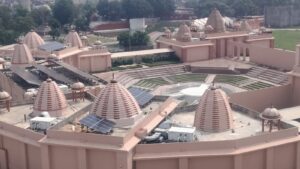
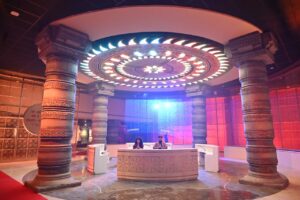
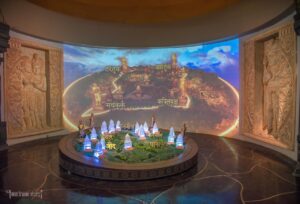
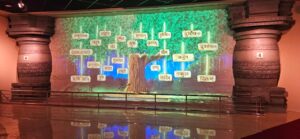
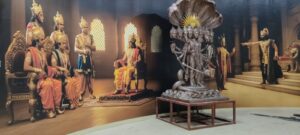
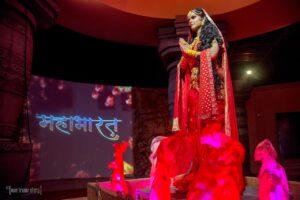
Mahabharat Anubhav Kendra at Jyotisar, Kurukshetra, is a landmark experiential museum curated by CS Direkt for Haryana Tourism on the sacred land where the Bhagavad Gita was revealed. Spread across a 17-acre campus with a built-up area of 10,000 sq. m., it transforms the Mahabharata into an immersive, technology-driven journey for visitors of all ages.Five interconnected galleries chronologically narrate the epic—from the composition of the Jaya Samhita and the Kuru lineage to the pre-war events, the eighteen-day battle, the aftermath, and the timeless philosophy of the Bhagavad Gita. The experience features 257 minutes of original 2D and 3D content, delivered through 125 projectors and 85 digital displays.Signature attractions include an AI-powered Ved Vyaas avatar, an interactive archery experience at Draupadi’s Swayamvar, a kinetic Bhishma Sharshayya, a 360-degree rotating battlefield theatre, projection mapping, holography, immersive dome experiences, layered dioramas, hyper-realistic mannequins and AI-driven interpretation. Created with specialists and artisans from across India, the museum sets a new benchmark for immersive heritage storytelling through the seamless integration of culture, technology and design.
What did the client want to achieve?
The Government of Haryana envisioned creating far more than a conventional museum—it sought to transform the timeless epic of the Mahabharata into a deeply immersive, emotionally engaging experience that would allow visitors to relive the era rather than simply learn about it.The objective was to bring every significant episode of the Mahabharata to life through contemporary storytelling, cutting-edge technology and multisensory experiences, enabling visitors to witness the epic as though they were present alongside its characters. Rather than presenting static artefacts and text panels, the museum was intended to evoke the emotions, dilemmas, philosophies and values that define the Mahabharata.The client also wanted to create a landmark cultural attraction at Jyotisar, the sacred birthplace of the Bhagavad Gita, enhancing its significance as a destination for pilgrims, students, families and tourists alike.
Scope of work your company was involved in
We undertook the complete concept-to-commissioning responsibility for the Mahabharat Anubhav Kendra at Jyotisar, Kurukshetra. The scope began with developing the overarching concept, research, visitor journey, curatorial storyline and detailed scripts, translating the Mahabharata into an engaging chronological experience. The building was strategically divided into interconnected galleries, thematic zones and transition spaces covering the origins of the epic, pre-war events, the eighteen-day battle, the post-war period and the teachings of the Bhagavad Gita.CS Direkt planned and designed every museum zone, including spatial layouts, exhibit placement, circulation, lighting intent, graphics and visitor interaction. The production scope included fabrication and installation of information panels, layered diorama sets, high-relief murals, thematic wallpapers, scenic environments, props, interactive exhibits and hyper-realistic mannequins.The company also created and integrated the complete digital experience, including 2D and 3D films, projection-mapped content, immersive dome and 360-degree presentations, holographic sequences, AI avatar interactions, kinetic installations and screen-based interpretation.
What key challenges were faced?
The Mahabharat Anubhav Kendra presented a unique challenge of transforming 23 acres of barren land, including a natural water body, into a world-class immersive museum campus that could do justice to one of the world’s greatest epics. One of the most demanding technical challenges was creating a seamless 360-degree dome experience, requiring ultra-high-resolution content and complex synchronization across an exceptionally large projection surface .Several galleries required the integration of kinetic installations with synchronized films, while others demanded a seamless blend of physical diorama sets and projected visuals. Beyond engineering, the greatest creative challenge was ensuring that technology never overshadowed the narrative. Every projection, animation, lighting cue and interactive element had to serve the story, allowing visitors to connect emotionally with the Mahabharata rather than being distracted by the technology itself. Operationally, the project also required the development of a robust Museum Management System capable of synchronizing audio, video, lighting and show control across five interconnected buildings with multiple immersive zones, ensuring a flawless and unified visitor experience throughout the campus.
How were those challenges resolved?
Every challenge was resolved through innovative engineering, meticulous planning and a story-first design philosophy. For the 360-degree dome theatre, conventional 16:9 content was re-engineered into an ultra-wide panoramic format, ensuring seamless projection, visual continuity and complete audience immersion. Where physical installations and digital media had to coexist, bespoke synchronized solutions were developed. In the Bhishma Sharshayya gallery, a kinetic installation of Bhishma and the moving bed of arrows was precisely synchronized with the film, enabling seamless interaction between the physical figure and projected visuals. Throughout the museum, technology was never treated as an attraction in itself; every projection, kinetic element and interactive installation was designed to deepen the storytelling and enhance the visitor’s emotional connection with the Mahabharata. To manage the complexity of five interconnected buildings and multiple immersive galleries, an advanced Museum Management System, developed with international expertise, enabled centralized monitoring and micro-management of audio, video, lighting and show-control systems, ensuring flawless synchronization and operational efficiency across the entire campus.
How has your work helped the client?
The Mahabharat Anubhav Museum has transformed Jyotisar from a revered pilgrimage site into a world-class cultural and experiential destination. While Jyotisar has always been sacred as the birthplace of the Bhagavad Gita, the museum now allows visitors to relive the Mahabharata through immersive storytelling and cutting-edge technology. The project has strengthened Haryana Tourism’s cultural offerings by creating a compelling reason to visit Kurukshetra, encouraging longer stays and benefiting the local tourism and hospitality economy. It has also generated direct and indirect employment, including opportunities for local residents in operations and visitor services. With weekend footfalls often reaching 600 visitors, the museum has attracted families, students and younger audiences who may not typically engage with traditional museums. Through projection mapping, immersive environments, interactive installations and innovative audio-visual experiences, it has made the epic accessible and engaging for new generations. For the Government of Haryana, the museum is a landmark example of heritage preservation through innovation.
What are you most proud of about the project?
We are immensely proud to have transformed one of India’s greatest epics into a living, immersive experience that brings together storytelling, craftsmanship and technology while remaining true to the spirit of the Mahabharata. Rather than relying on a single exhibit format, the museum offers a diverse range of experiences, including layered dioramas, murals, hyper-realistic mannequins, projection mapping, interactive installations, kinetic exhibits and specially created films. Many of these elements work together seamlessly, creating memorable moments such as Bhishma’s kinetic bed of arrows and the immersive 360-degree Kurukshetra war experience. We are equally proud that the museum resonates across generations—older visitors connect with its cultural and spiritual significance, while children and young audiences engage through its interactive, technology-led interpretation. With approximately 300 visitors on weekdays and 600 on weekends, the museum has established itself as a major cultural attraction. A defining moment was its inauguration by Hon’ble Prime Minister Shri Narendra Modi, followed by his appreciation of the project on social media.
VIDEO link of the project space: